
Advanced Shoulder Replacement Surgery in Lahore for Pain Relief By Dr. Waqas Javed
At Bones Cure, Dr. Waqas Javed performs advanced shoulder joint replacement surgeries in Lahore. A personalized treatment plan is designed specifically for you to reduce pain and restore your mobility to lead a normal life.
- 20+ Years of Experience in Shoulder Replacement Surgery
- Total, Partial & Reverse Shoulder Replacement Options
- Personalized Treatment Plans for Every Patient
- Comprehensive Care from Consultation to Recovery
Meet Dr. Waqas Javed Shoulder
Replacement Surgeon in Pakistan
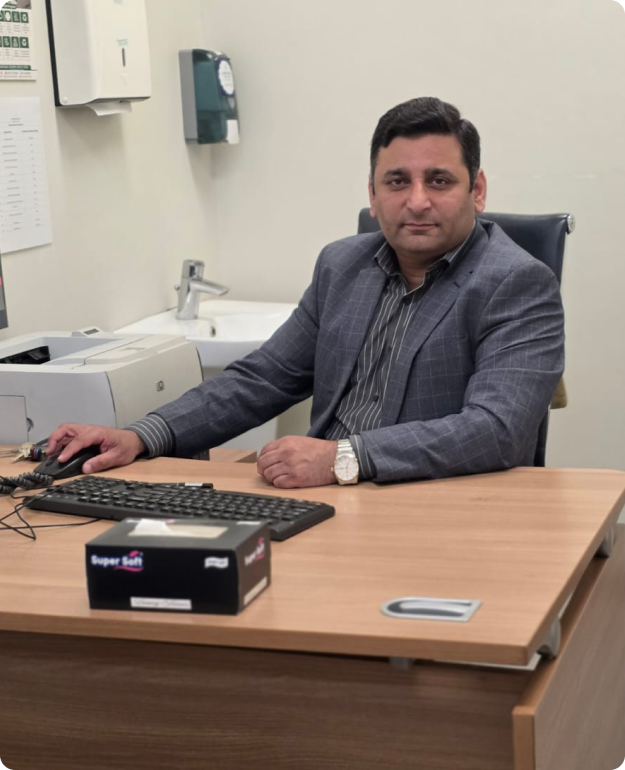
Dr. Waqas Javed is an experienced Trauma and Orthopedic Surgeon in Lahore who has been practicing for over 20 years. During his practice, he has successfully treated many patients with both simple and complicated bone and joint disorders and helped them achieve comfort in movement. After obtaining his MBBS from Nishtar Medical College, Multan, Dr. Waqas Javed obtained his FRCS in Trauma & Orthopedic Surgery from the Royal College of Physicians and Surgeons of Glasgow. He is also a Fellow of the European Board of Orthopedics and Traumatology (EBOT).
Dr. Waqas Javed has served as a Senior Fellow in Trauma & Orthopedics at several national and international hospitals. As an experienced orthopedic surgeon, he specializes in the diagnosis and treatment of complex orthopedic injuries, Hip Replacement Surgery, Knee Replacement Surgery, and other advanced joint replacement procedures.
Bones Cure was established with a vision to offer complete orthopedic services so that people can live their lives without any pain. . He does not always suggest surgical procedures. Rather, after a careful examination of patients’ cases, he decides whether a shoulder replacement surgery will be beneficial or not.
If you are experiencing persistent shoulder pain and considering shoulder replacement surgery in Lahore, Dr. Waqas Javed will carefully assess your condition and recommend the most appropriate treatment based on the extent of your joint damage and your individual needs.
MBBS
Nishtar Medical College, Multan.

NHS
York District Hospital

PMDC
Orthopedic surgeon
No.43426-P
FRCS
Royal College of Physicians and Surgeons
No.40531

POA
Professional orthopedic associations in Pakistan

NHS
College of Physicians and Surgeons

(EBOT)
Fellow of the European Board of Orthopedics and Traumatology
EXCELLENTTrustindex verifies that the original source of the review is Google. I fell down stairs and heard a horrible crack I knew my ankle was badly broken. The emergency room said I'd need surgery and months of recovery. I was devastated, thinking I'd be immobilized forever. My sister brought me to Dr. Waqas at Bones Cure, and he performed ankle fracture surgery expertly. What amazed me most was his detailed post-surgery rehabilitation plan. Within 6 weeks, I was walking normally. Within 3 months, I was playing cricket again. Dr. Waqas didn't just fix my broken ankle he gave me back my sports life.Posted on GoogleTrustindex verifies that the original source of the review is Google. My grandmother is 65 years old, and her knees had completely given up on her. Walking to the market, climbing stairs, even sitting- everything hurt. Several doctors told her she needed knee replacement surgery in Lahore, but she was terrified. After finding Dr. Waqas, everything changed. He explained the total knee replacement procedure so clearly that her fear turned into hope. The surgery went perfectly, and now she's walking 3 kilometers every day without pain. Seeing my grandmother active and smiling again is the greatest gift. Thank you, Dr. Waqas, for giving her life back.Posted on GoogleTrustindex verifies that the original source of the review is Google. Hum na operate karwya ha abhor Acha Operate Kia Doc Waqas JavadPosted on GoogleTrustindex verifies that the original source of the review is Google. My mother required a hip replacement as she was suffering from long term pain. We were looking for a well know and experienced hip replacement surgeon in Lahore until we found Dr. Waqas. He guided us through every step from diagnosis till recovery period. He explained the pros and cons of the surgery and guided us the expected recovery timeline honestly. Successful Hip replacement surgery of mother done by Dr. Waqas. He is very cooperative and always available for on phone consultation. Would highly recommend him to anyone looking for and experienced orthopedic surgeon in Lahore.Posted on GoogleTrustindex verifies that the original source of the review is Google. Alaikum Assalam Team Bonescure,I don’t have enough words to thank Dr. Waqas and Team Bonescure. My mother, who is around 60 years old, suffered a severe injury where her leg bone broke and went straight into the muscle. Given her age, we were utterly terrified and felt completely helpless. But Dr. Waqas performed her surgery with absolute brilliance and immense care. Today, by the grace of Almighty Allah, my mother is recovering beautifully and is feeling so much better. Seeing her walk and heal is the greatest gift for our family. Thank you, doctor, for saving my mother's mobility and giving us our happiness back!" Bonescure,Thank you so much for your kind words! I am writing this to share my immense happiness. By the grace of Almighty Allah, I feel 100% recovered now and everything is perfectly fine.Today, I can walk, run, and move around beautifully. I am currently in Saudi Arabia, managing all my daily routines without any pain. As for my Namaz, I pray while sitting down, and Alhamdulillah, I can do it very comfortably and completely pain-free.I am deeply thankful to Dr. Waqas and the entire team for giving me my life back. Your expert care has truly changed my life. May Allah bless your team with more success!Best regards,Muhammad faisalPosted on GoogleTrustindex verifies that the original source of the review is Google. We are truly grateful to Dr. for the excellent care he provided. He performed my mother’s knee fracture surgery, and it went very well. Throughout the process, he was professional, kind, and reassuring. Thanks to his skill and dedication, my mother is recovering well. We highly recommend him to anyone looking for an experienced and compassionate orthopedic surgeon.Posted on GoogleTrustindex verifies that the original source of the review is Google. I had elbow surgery with Dr. Waqas, and I couldn’t be happier with the care I received. From the first consultation to my follow-up visits, everything was handled with professionalism and genuine care. Dr. Waqas explained my condition and the surgery clearly, which really helped put me at ease. I’m grateful for the excellent treatment. I highly recommend Dr. Waqas Javed to anyone looking for a skilled and compassionate orthopaedic surgeon.Posted on GoogleTrustindex verifies that the original source of the review is Google. Doctor did an excellent job my father had fractured on both legs but now Alhumdulilah he is doing fine. There were a severe fractures in both legs but Dr. Waqas handled it very well and now it's been three months my father is in very good condition.Posted on GoogleTrustindex verifies that the original source of the review is Google. Had BL TKR done for my khala in 2021. Best Doctor ever. He stayed in touch with her two years after to see the progress. Amazing Dr, his counseling is top notch. Need more surgeons like him.Posted on GoogleTrustindex verifies that the original source of the review is Google. Long office hours ki wajah se hand numbness aur tingling start ho gayi thi. I searched for carpal tunnel syndrome treatment in Lahore and consulted Dr. Waqas Javed. Unhon ne clearly explain kiya aur treatment se kaafi improvement aayi. If someone is looking for a carpal tunnel syndrome doctor specialist in Lahore, he’s a good choice.
What is Shoulder Replacement Surgery?
In cases when shoulder pain starts to seriously interfere with your routine activities and other treatment options cease to be effective, a shoulder replacement surgery in Lahore will become an option for you to change your life for the better.
These procedures are designed to provide durable, high-quality implants that help restore shoulder function and improve your range of motion. While some patients may benefit from arthroscopic shoulder surgery for less severe shoulder conditions, those with advanced joint damage may require shoulder replacement surgery. When performed by an experienced orthopedic specialist and followed by a structured physiotherapy program, shoulder replacement surgery can provide excellent long-term results.
The primary goal of the surgery is to enable comfortable mobility, get rid of the pain, strengthen the shoulder, and return to your usual life. These surgeries aim at providing you with durable and strong implants that allow you to move your arm in a normal way without any problems.
If the surgery is performed properly by an orthopedic specialist and followed by adequate physiotherapy, you will achieve great results.
Signs You May Need Shoulder Replacement Surgery
Most cases of shoulder pain begin gradually. However, what begins as simple pain can become constant pain that hinders your day-to-day activity, work, and even sleep. It could be the right time for you to see an orthopedic surgeon to find out if your condition requires shoulder pain treatment if you have failed to find relief through medication, physiotherapy, injection, and other forms of treatment. You may need a detailed shoulder assessment if you experience:
- Persistent pain that cannot be relieved by the treatments
- Unable to raise your arms above shoulder level
- Pain while driving or steering a vehicle
- Shoulder pain that regularly disturbs your sleep
- Reduced shoulder movement and stiffness
- Inability to lift hands overhead and behind your body
- Weakening of the shoulder muscles when undertaking regular activities
- Activities such as dressing up, brushing your teeth, cooking, and doing other household chores becoming increasingly hard
Types of Shoulder Replacement Surgeries Performed by Dr. Waqas Javed
Dr. Waqas Javed thoroughly evaluates your shoulder through clinical assessments and diagnostic tests to determine the most appropriate treatment method for you. He will try to conserve healthy bone while stabilizing the shoulder joint and minimizing pain.
| Type | Best For | What is Replaced |
|---|---|---|
| Total Shoulder Replacement | Advanced joint arthritis with an intact, healthy rotator cuff | Both the humeral ball and the glenoid socket |
| Reverse Shoulder Replacement | Severe arthritis accompanied by irreparable rotator cuff tears | The ball and socket locations are reversed |
| Shoulder Replacement | Isolated humeral head damage with a healthy socket | Only the damaged humeral ball |
| Shoulder Resurfacing | Younger, active patients with preserved bone mass | Only the worn surface of the humeral head |
Who Is a Good Candidate for Shoulder Replacement Surgery?
Selecting an orthopedic surgical procedure demands a well-balanced evaluation of the medical images, severity of symptoms, and personal lifestyle. Surgery is indicated whenever there is joint degeneration to the extent that it affects day-to-day activities, and non-operative treatment does not provide any long-term relief from pain. If your cartilage is still intact, or you have improved through conservative treatment options, surgery can usually be deferred or even avoided.
You have severe shoulder arthritis causing constant pain.
Shoulder pain continues despite physiotherapy and injections.
Daily activities such as dressing or eating have become difficult.
You have advanced wear and tear of the shoulder joint.
Imaging shows significant joint damage.
You have a severely damaged rotator cuff with arthritis.
Previous non-surgical treatments have failed to provide lasting relief.
Pain affects your ability to work or maintain independence.
Your orthopedic surgeon recommends replacement after a complete assessment.
Pain regularly disturbs your sleep and shoulder pain treatment becomes necessary.
You have persistent stiffness with very limited movement.
Shoulder Replacement May Not Be Needed If:
Your pain is mild and improves with medication or rest.
The condition is expected to improve with non-surgical treatment.
Your shoulder movement is still largely normal.
The joint damage is minimal or in its early stages.
Imaging shows no major structural damage.
A rotator cuff injury can be repaired without joint replacement.
Conservative treatment has not yet been fully explored.
Daily activities can still be performed comfortably.
Your surgeon believes another treatment option will provide better results.
Pain occurs only after heavy activity or exercise.
Shoulder stiffness is temporary and likely to improve with rehabilitation.
Why Choose Bones Cure for Shoulder Pain Treatment in Lahore?
In our practice at Bones Cure, patient safety, surgical precision, and functional recovery remain our priority. The entire process of joint restoration is under the supervision of Dr. Waqas Javed and includes both advanced orthopedics and compassionate treatment of patients. Here is why patients choose us:
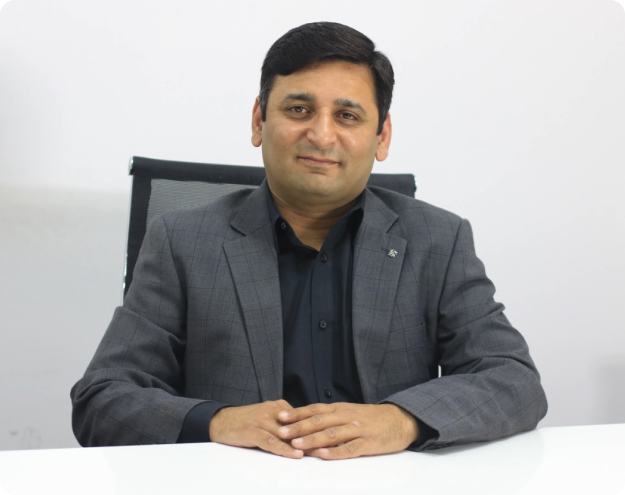
- Experience: Take advantage of more than 20 years of surgical experience in the UK and Pakistan acquired by Dr. Waqas Javed personally.
- Modern Medical Facility: All procedures are conducted in sterile and state-of-the-art operating rooms meeting all international requirements for infection control.
- Latest implants: We employ durable medical-grade joint implants produced by reputable orthopedic companies of the world.
- Physiotherapy: Patients get individual step-by-step recommendations regarding physical therapy to preserve their recovery.
- Rehabilitation Plan: Recovery programs are customized based on your way of life and place of residence.
- Trained Staff: Your recovery will be managed by the professionals skilled in modern bone-sparing surgery.
Your Shoulder Replacement Surgery Journey at Bones Cure
In most of the cases, patients are not sure of the shoulder pain treatment process and put off treatment until it gets worse. At Bones Cure, every detail is well-planned in order to ensure your convenience, clarity, and comfort at all times. Here is a step-by-step journey from consultation to treatment:

Initial Consultation and Shoulder Assessment
At Bones Cure, your first step in your process begins with a consultation. Your orthopedic surgeon, Dr. Waqas Javed, will listen to your symptoms and joint problems, assess how your shoulder pain is affecting your daily activities, take account of your medical background, and conduct a shoulder joint examination.

Diagnosis and Treatment Planning
After the diagnosis, Dr. Waqas Javed will discuss all treatment options for your condition. If surgery is recommended, Dr. Waqas Javed will explain whether a total, partial, or reverse shoulder replacement surgery is the most suitable option for your condition. He will also discuss the expected benefits, potential risks, available implant options, and answer any questions you may have to help you make an informed treatment decision.

Shoulder Replacement Surgery
During the surgery, the orthopedic surgeon's team meticulously plans the entire process. Using advanced surgical methods and high-quality implants, only the damaged parts of your shoulder joint are replaced while leaving the rest of your healthy bone untouched.

Recovery, Rehabilitation, and Follow-Up Care
Your recovery process starts right after the procedure. Before your discharge from the hospital, you will be instructed about pain control, wound management, safe use of your shoulder joint, and other rehabilitation exercises. Follow-up visits will provide the orthopedic surgeon with the opportunity to examine your healing process and revise your rehabilitation regimen.
Your Shoulder Replacement Surgery Recovery Timeline
The recovery process following shoulder replacement surgery in Lahore takes time, but every step taken during the course of treatment will lead to significant improvement. Even though recovery periods may be different for each individual, sticking to your rehabilitation regimen and visiting your appointments will help you get the best results.
Acute Recovery Period (0 – 2 Weeks)
In the first two weeks, your body starts recovering from the surgery. Pain, swelling, and stiffness are normal phenomena and can be controlled using appropriate medications. During this period, you will use a shoulder brace and start doing exercises recommended by your doctor.
Early Phase of Recovery (2-6 Weeks)
With the advancement of recovery, physiotherapy plays an increasingly significant role. Gentle exercises will help avoid stiffness and keep the healing tissue safe. Many patients experience reduced pain and increased comfort during normal daily activities.
Intermediate Phase of Recovery (6-12 Weeks)
There is further improvement in the strength and function of the shoulder during this phase. Your physiotherapy program includes increasingly active participation aimed at regaining strength, flexibility, and functional capability.
Many patients find it possible to carry out light home duties and return to work at the office with the permission of the surgeon.
Recovery Period (3–6 Months)
In three to six months, most patients see considerable improvement in terms of pain relief, shoulder movement, and ability to perform their normal activities. Though recovery may extend beyond six months for some people, many of the patients have reported feeling much better and more confident than they did prior to surgery.
Voices of Healing & Hope
Some of the real stories from people who trusted Dr Waqas Javed from Bones Cure for their treatment.

“My father had been living with severe shoulder pain for years, and it reached a point where he couldn’t even lift his arm to eat comfortably. Seeing him struggle every day was difficult for our family. Dr. Waqas explained the shoulder replacement surgery with patience and honesty, which gave us confidence in the treatment. Today, my father can move his shoulder much more comfortably and has regained the independence he had slowly lost.”

Ali Hassan
“My mother had stopped doing the things she loved because of constant shoulder pain. Simple tasks like cooking, getting dressed, or even combing her hair had become painful. From our first consultation, Dr. Waqas treated her with kindness and made sure we understood every step of the surgery and recovery process. After rehabilitation, she’s back to enjoying her daily routine without the constant discomfort that once affected her life.”

Ayesha Malik
“After years of shoulder arthritis, the pain became so severe that I could no longer sleep comfortably or enjoy time with my family. I was nervous about shoulder replacement surgery, but Dr. Waqas explained everything in simple language and never rushed my decision. With regular physiotherapy and follow-up care, my recovery has been better than I expected. I can now drive, work, and use my arm without the constant pain that once affected every part of my life.”
Faisal Mahmood
Shoulder Replacement Surgery Cost in Pakistan
One of the main concerns that many patients have before opting for treatment is the shoulder replacement surgery cost in Pakistan. Although the cost plays an important part, it must not become the deciding factor while selecting the orthopedic surgeon or the clinic where the procedure is performed.
Dr. Waqas Javed at Bones Cure always provides his patients with full transparency. Prior to surgery, you will get a thorough assessment and a clear explanation of your treatment plan, which will help you know what expenses to expect from the process. Since every patient has unique requirements, the overall cost may vary from person to person. Here are some of the factors affecting the cost:
Selection of the hospital or Clinic
Price will depend upon the surgical hospital you choose in Lahore for your surgery.
Implant type and origin
Contemporary imported prosthetic joint components (total, reverse, or partial) have different prices depending on their material and specifications.
Surgeon charges
This includes the professional charges of your renowned shoulder replacement surgeon in Pakistan.
Room and anesthesia category
The prices will include anesthesia cost and the category of room in which you will be hospitalized; either the standard ward, a private room, or a VIP room.
Underlying disease
Extra preoperative medical consultation and ICU observation might be needed in cases of complex underlying systemic diseases.
Although money matters greatly, the advantages you receive after having your movement restored and being rid of joint pain will last for many years to come. Good surgical techniques and capable hands mean that your joint replacement will be very long-lasting.
Explore Our Complete Orthopedic Treatment Services
Frequently
Asked Questions
How long does shoulder replacement surgery take?
The procedure normally takes about 1.5 to 2 hours, based on the difficulty level of the surgery and the specific kind of shoulder replacement surgery being performed.
Is shoulder replacement painful?
In the procedure, anesthesia is administered to ensure that there is no pain during the process. After the procedure, some pain is normal, but it will be controlled with medication and after-surgery treatment.
Can I drive after surgery?
Patients cannot drive while their shoulder is still healing and when they have to use a sling to support their arm. This procedure is usually done after several weeks.
Can I sleep on my side?
It is best to avoid sleeping on the operated shoulder during the early recovery period. Sleep on your back or the non-operated side until your surgeon advises it is safe to do otherwise.
How long do shoulder implants last?
Shoulder replacements can last for up to 15 or 20 years or more, depending on the correctness of the procedure, adherence to rehabilitation practices, and absence of excessive loads on the joint.
What is the success rate?
It should be noted that shoulder replacement is among the most effective orthopedic surgeries for patients with severe damage to their shoulder joints.
What activities should I avoid?
Once recovered, almost all activities can be easily managed. However, one should avoid activities that involve too much strain on the artificial joint.
Is physiotherapy necessary?
Yes. Rehabilitation exercises are one of the most crucial stages of the recovery process. It ensures that you regain strength, flexibility, and mobility of your shoulders.
When can I return to work?
It depends upon your job and recovery process. People who have an office-based job may get back to work within a few weeks, while others with physically challenging occupations may need several months.
What can I never do after shoulder replacement?
Once you recover from the surgery, most people can lead a normal life again. However, one should avoid doing activities that require heavy lifting, high-impact activities, and things that put a lot of strain on the artificial joint.