
Waking up for many people involves experiencing a familiar sharp pain in the pelvis area or a dull ache and stiffness. Walking, going up and down stairs, getting out of bed, and even sitting in one place could cause pain to increase. Living with such a physical condition is frustrating, exhausting, as well as isolating since it takes away the sense of independence and turns a person’s life into one filled with caution and fear.
However, the human body is capable of healing, stabilizing, and adapting to its needs when provided with the appropriate physical activity. It means that one does not have to remain a passive observer while suffering from joint degeneration, because developing an exercise regimen specifically aimed at certain muscles may change everything.
Spending just several minutes daily practicing some movements can make the joint less sensitive, decrease daily wear and tear, and enable a person to live an active and healthy life again. For patients with severe joint damage, hip replacement surgery by Dr. Waqas Javed from Bones Cure offers a safe, reliable, and highly effective solution when conservative treatments no longer provide adequate relief. With extensive expertise in joint replacement surgery and a patient-centered approach, Dr. Waqas Javed carefully evaluates each case to develop a personalized treatment plan that restores mobility, relieves chronic pain, and improves overall quality of life.
In this blog, you will find information about the best exercises for hip joint pain, how they can help, and when it is necessary to consult specialists regarding hip replacement surgery.
A common misunderstanding about joint pain is that one should cease all movements and take complete rest. Indeed, acute traumas need temporary immobilization; however, the pain caused by chronic joint diseases only grows with inactivity. The hip is a complicated ball-and-socket joint located deep within an area covered by a dense layer of muscles, tendons, and ligaments.
As soon as an individual ceases all movements, the surrounding tissues quickly become tightened and weakened. Thus, it becomes unable to protect the joint. It leaves the cartilage exposed to all impacts. In extreme cases, hip replacement surgery might be needed.
Moreover, joints receive their nutrition through a natural phenomenon called fluid exchange. By moving within its physiological limits, a joint becomes a kind of sponge. It removes the by-products of metabolism and takes up the fresh synovial fluid for joint lubrication. Physical activity will reduce hyperactivity in muscles and release endorphins, which are natural painkillers.
Still Struggling With Hip Pain? When Exercise Isn't Enough, Trust Dr. Waqas Javed At Bones Cure For Successful Modern Hip Replacement Surgery
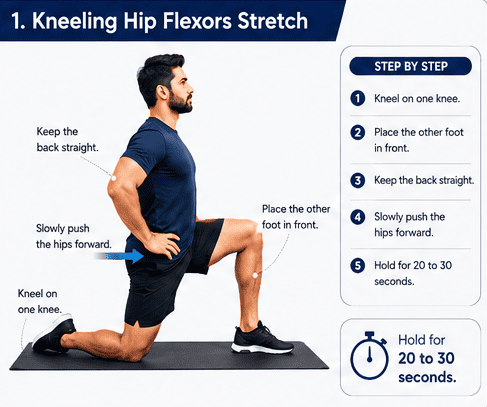
Excessive periods spent sitting have been found to cause a shortening of the muscles located right at the front of the thigh, thus causing misalignment of the pelvis. Here is how to do a hip flexor stretch:
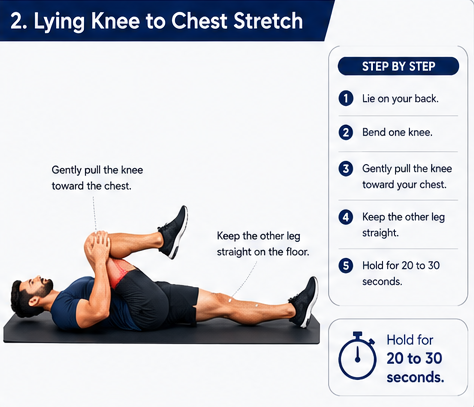
This stretch is one of the best exercises for hip joint pain to provide gentle relief and pressure release for the back side of the joint and lower back. To perform this stretch correctly, the patient needs to lie face-up on a yoga mat or bed and extend both legs straight out.
They slowly bring one leg to a bent position and draw it towards the body using their hands on the top of the thigh area to gently pull the leg towards the chest. They then hold this stretch for 30 seconds while taking deep breaths and relaxing the gluteal muscles.
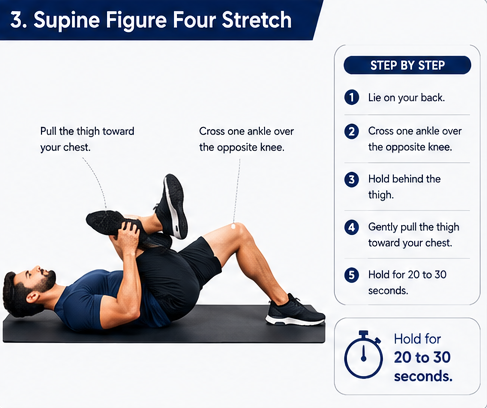
Ideal for stretching the deep external rotators and the piriformis muscles, this stretch relieves the pressure at the back of the hip. In a supine position with the knees flexed and feet on the ground, the patient elevates the right leg and crosses the right ankle onto the left knee to form a clear “4”.
The patient reaches between the legs and holds the back of the left thigh to pull the leg closer to the body until they feel a strong stretch in the outer right buttock.
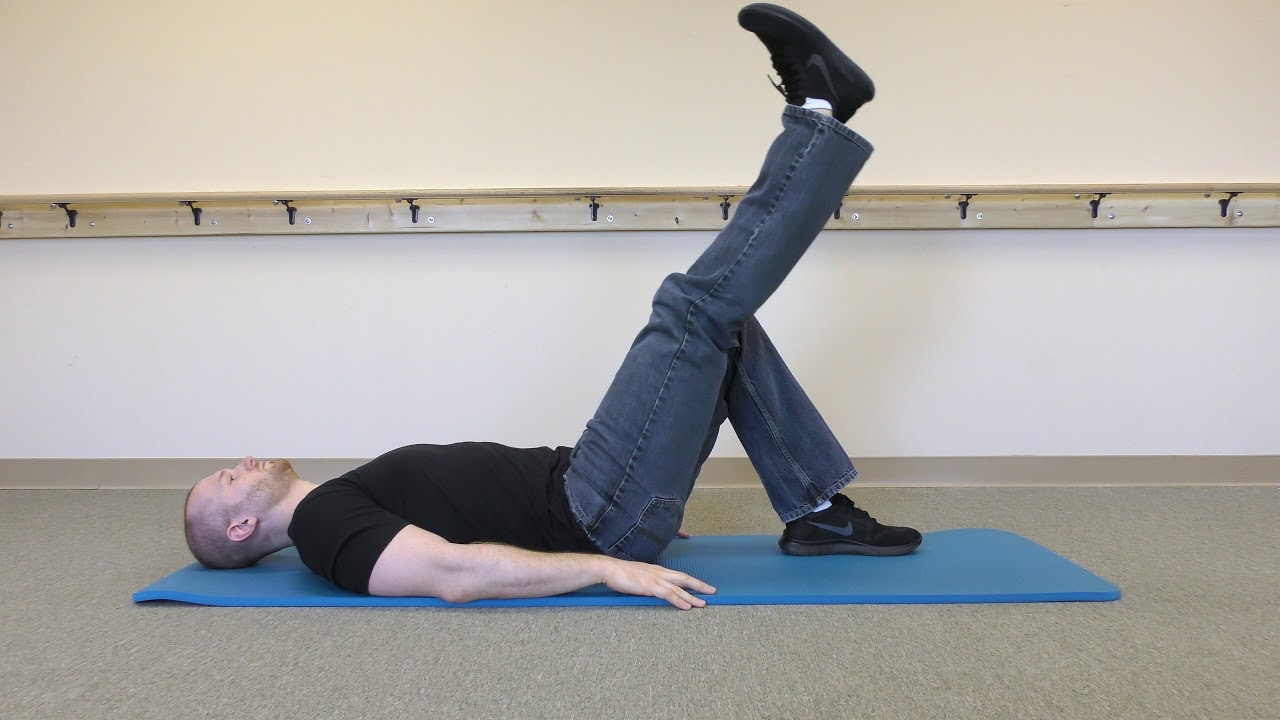
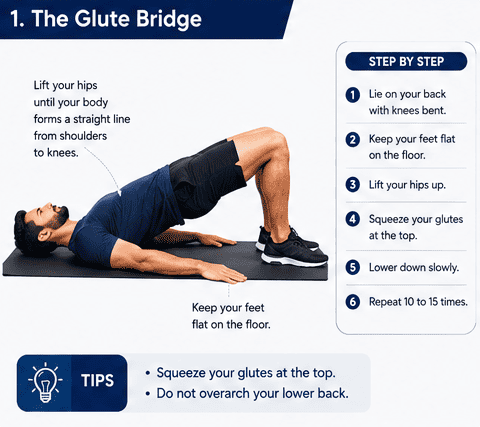
One very useful exercise that the physical therapist recommends is the classic glute bridge. This exercise is not only excellent for strengthening but also does not load the joint in any way. For this particular exercise, the patient:
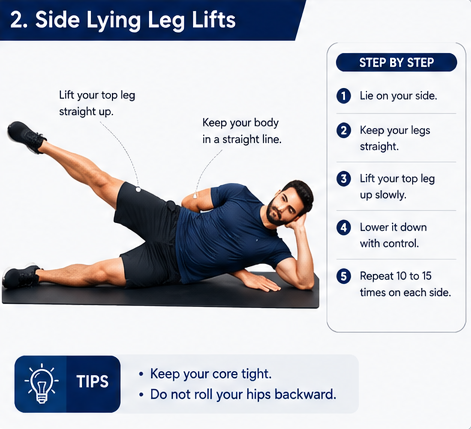
The specific muscles targeted by this exercise include the gluteus medius, which is a vital muscle for stability of the hip joint, found on the outside of the hip. Weakness of the gluteus medius muscle leads to instability of the hip during gait because the pelvis drops and shakes, causing irritation and pain within the hip joint. The patient positions themself on their side on a padded surface with the hips, knees, and feet in line with each other.
The top leg is kept straight and the ankle slightly flexed while lifting the leg slowly towards the ceiling. The effort should be focused strictly on hip muscles, and no movement of the body is allowed either backward or forward.
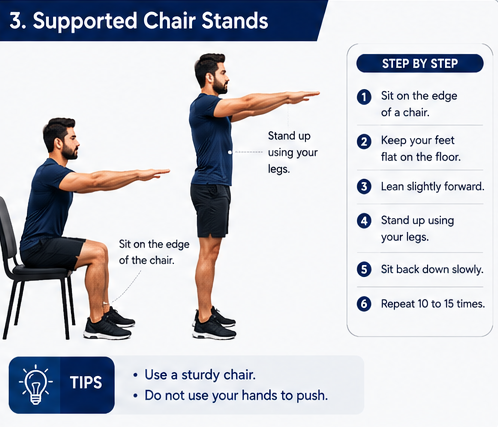
The exercise is similar to the actual process involved when performing squats. Still, it has a safety cushion that makes it an effective exercise for rebuilding strength of the quads and glutes without posing risks.
The patient should position an armless chair against a flat wall to ensure that it does not slide during the exercise. They should sit on the chair towards the front of the seat with their feet flat on the floor, shoulder-width apart.
Arms are crossed across the chest and lean slightly forward from the hip crease. Then, using the leg muscles, push off the ground and rise to a fully upright standing position.
Sometimes even the best exercises for hip joint pain are not effective. For individuals suffering from advanced stages of arthritis or extreme damage to the joint, conservative measures may cease being helpful. At this point, hip replacement surgery might become the best course of action, and understanding the hip replacement surgery cost in Pakistan can help patients plan for their treatment.
Physical activity can be one of the most effective ways to relieve pain. The exercises for hip joint pain will help patients become more flexible, build strength in the muscles around the hip, and regain a sense of safety during movement. However, it won’t happen immediately. Regular small achievements are usually the basis of permanent progress and improvement of the patient’s condition, comfort level, and mobility. Combining exercise with a healthy lifestyle may bring good results to many people.
If hip pain continues despite exercise and other non-surgical treatments, Dr. Waqas Javed at Bones Cure provides comprehensive evaluation and advanced treatment options, including Modern hip replacement surgery, to help patients regain movement and live with greater comfort. With expert care from consultation through recovery, Bones Cure is committed to helping every patient return to a more active and pain-free life.