
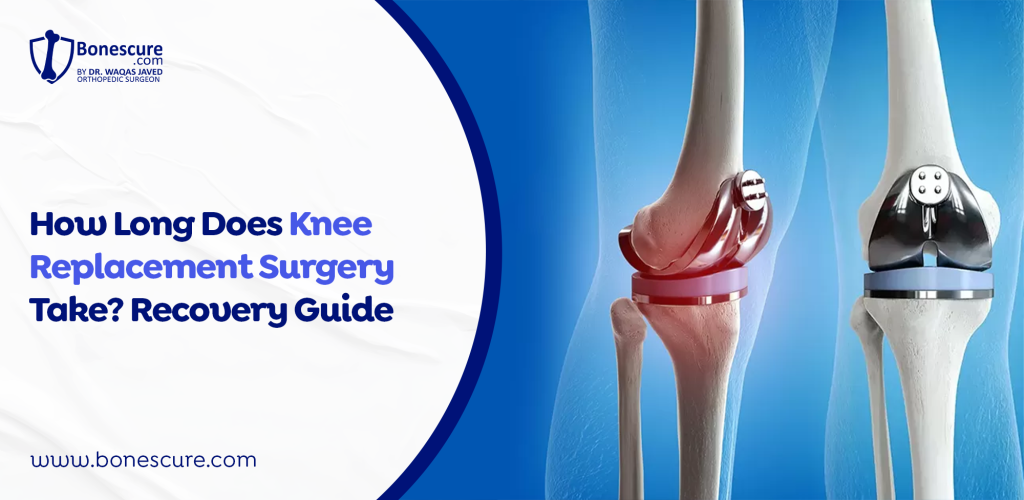
If someone suffers from a degenerated joint, it makes simple routine actions extremely hard to perform. Continuous pain takes away freedom and leaves the person tired, lonely, and disappointed. Patients rely on conservative therapies for relief from the discomfort, but at times, these treatments do not help. This occurs due to the presence of a critical knee condition. Patients postpone the knee replacement surgery due to concerns about both the procedure and the recovery period.
However, the knee issue may aggravate if the patient does nothing about their health state. It leads to increased pain intensity and reduced mobility. One may wonder about the time for a knee replacement surgery and how painful it will be.
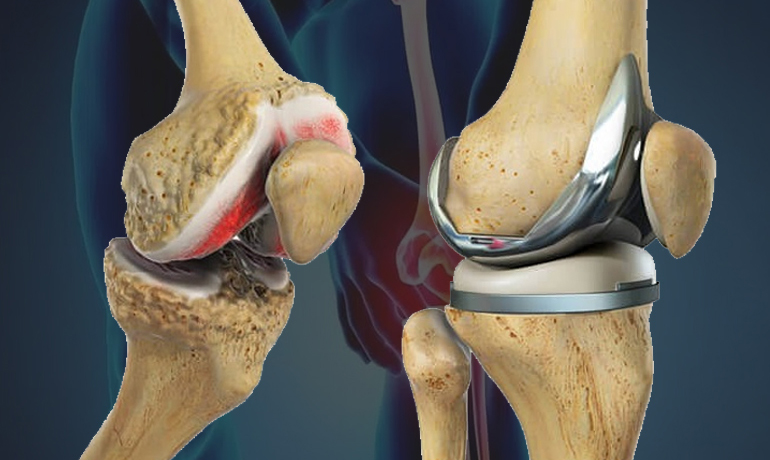
Fortunately, advancements in knee replacement surgery in Lahore have made the procedure safer, more effective, and quicker, leading to improved outcomes for patients.
Dr. Waqas Javed at Bones Cure offers successful knee replacement surgery solutions to patients who are suffering from chronic knee pain and want a long-lasting treatment for it. He uses precise and advanced surgical techniques to replace the damaged joint with a new one. Knowing some facts about what to expect during and after such procedures may make patients more ready and less scared of their upcoming operation.
This article provides detailed information about the length of the knee replacement surgery itself, hospital stay, recovery, and many other things.
The time that it takes for a patient to be in the operating room is actually quite short, considering how much pain relief it gives in the long run. In an average joint replacement surgery, it usually takes anywhere from one to two hours.
During this time, for a knee replacement surgery, the doctors carefully remove the cartilage and bones that are damaged before shaping the bones of the femur and tibia, and replacing them with artificial parts. However, if a patient goes through a partial surgery, then the time will obviously be shorter since only one part of the joint needs treatment.
Nevertheless, patients must understand that their stay outside the room can take up to three to four hours because it includes pre-surgical preparations and their recovery time in the PACU (post-anesthesia care unit).
The process of recovering from an injury or surgery is a gradual process involving lots of small wins. Everyone recovers at their own pace. But the specific steps involved are fairly consistent with regard to the time for a knee replacement surgery, and they are mentioned below.
In just several hours following the end of anesthesia, the journey towards a pain-free existence starts for the patient. With respect to orthopedic procedures, early mobility is a key component that today’s protocols emphasize. The post-op period will begin with encouragement by the surgical staff to have the patient stand with assistance and start taking a few steps through walking with the aid of walking sticks or crutches.
This phase involves careful management of pain through various approaches, including localized nerve blocks, painkillers, and icing of the site. Ankle pumps are introduced right away to reduce the chances of developing blood clots.
After discharge from the hospital, your major concern must be that of protecting your injury. The key here is allowing the joint to get back to its normal function. At this point, physical therapy becomes critical in the rehabilitation process. Your goals are those of extending your knee joint as well as flexing it at a ninety-degree angle.
The inflammation subsides after the second or third week, when you have gained some strength, enabling you to walk without a walker. Surgical staples are normally removed after two weeks.
This is usually the most emotionally gratifying stage. By week six, many patients will be able to drive again. There is a reduction in stiffness and swelling. It can facilitate individuals with occupations that do not require physical activity to comfortably go back to work. Exercises will now be less intense, including cycling, swimming, and long walks outdoors on level ground.
Although the joint may already appear quite stable by three months, complete internal healing is still taking place within the year. During this final period, the lingering warmth and slight swelling from being active will finally subside entirely.
Muscles around the joint will be stronger, allowing the patient to partake in physically demanding tasks like golf or doubles tennis. The artificial joint will feel completely natural after a year, since it moves smoothly in the body.
All recoveries are not alike. Several factors determine the required time for a knee replacement surgery recovery. Such as:
The time for a knee replacement surgery recovery period varies depending on the activity.
| Activity | Typical Timeframe |
|---|---|
| Walking with Assistance | 1–3 Days |
| Walking Independently | 4–8 Weeks |
| Driving | 4–6 Weeks |
| Office Work | 4–8 Weeks |
| Light Exercise | 6–12 Weeks |
| Full Recovery | 6–12 Months |
Patients should always follow their surgeon’s specific recommendations before resuming activities.
Recovery time for a knee replacement surgery can only be successful and minimal when one finds the fine balance between pushing the body and giving the body time to heal naturally. Here are some tips to speed up the process naturally:
Therapy exercises must be done regularly to yield any results. Doing so prevents the joint capsule from tightening and creating scar tissue formation.
Swelling is the main cause behind joint stiffness and pain after surgery. Elevation and application of ice packs help tissues recover faster.
Recovery needs a lot of energy. The intake of protein-based foods, sufficient hydration, and fiber-containing foods supports the healing of surgical sites and helps combat the side effects of medicines post-surgery on digestion.
Rapid pivoting and turning put excessive pressure on the ligaments and implants, which are both healing and vulnerable at this time.
High-impact physical activities, such as running and jumping, should be avoided at all costs, as these could cause rapid wear of artificial joint parts.
It may be difficult to imagine starting down the road of having knee replacement surgery, but one can rest assured that this will not be a difficult road to walk; rather, it will be a road leading away from all kinds of restrictions.
Even though the total time for a knee replacement surgery procedure takes only a couple of hours to complete, the true change happens after a few months have passed and after undergoing many physical therapy sessions, during which one makes many small gains towards the final goal.
Dr. Waqas Javed from Bones Cure helps his patients to reach this end goal through successful knee replacement surgery in Lahore. Because treatment today can save you from complications later on. Any temporary pain is nothing compared to being able to walk without any walking assistance devices ever again.