
Parkinson’s disease is not easy to deal with. It is not like the flu that comes and goes away after some time. This neurological disease keeps worsening with time, and patients need to manage it with constant medications or other treatments. As this disease affects balance and movement, patients are at a higher risk of frequent falls and fractures.
This makes the condition more severe and often increases the need for proper hip replacement surgery in Lahore and hip fracture treatment in Parkinson’s disease patients. The recovery can be slower and more painful if not handled by an expert orthopedic surgeon. At Bones Cure, Dr Waqas Javed provides world-class care for managing hip fractures in Parkinson’s disease patients.
He offers extensive treatment from the first visit to follow-ups, helping the patient to regain their mobility as soon as possible. This article explains how to manage a hip fracture in a Parkinson’s disease patient, enabling them to get back on their feet successfully.
Parkinson’s disease patients struggle to control their movements and often lose balance while walking, which highlights the growing need for effective parkinson’s disease treatment in Pakistan. They experience tremors and slower reflexes, making it difficult to react quickly when they become unsteady. When a healthy individual trips, their natural reflex is to extend their arms to reduce the impact.
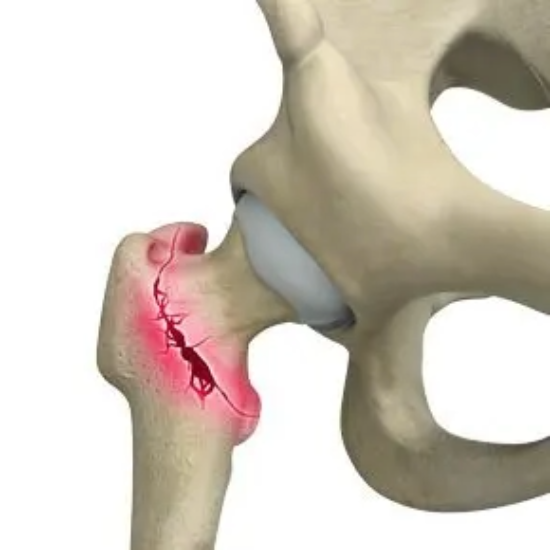
However, Parkinson’s slows reflexes and impairs coordination, so patients often fall directly onto their sides, placing the full force on the hip joint. Some patients may also suddenly freeze while walking, which is another major cause of frequent falls. In addition, reduced mobility and aging lead to lower bone density, significantly increasing the risk of fractures after a fall.
Below are some of the common risk factors that contribute to hip fracture in a parkinson’s disease patient:
| Risk Factor | How It Increases Fracture Risk |
|---|---|
| Poor balance | Makes falls more likely |
| Muscle stiffness | Reduces the ability to react quickly |
| Weak bones | Bones break more easily |
| Slow movement | Delays protective reflexes |
| Medication side effects | May cause dizziness or confusion |
| Vision problems | Increase tripping hazards |
In an unfortunate case, when a patient suffering from Parkinson’s disease gets a hip fracture, they should be brought to an orthopedic specialist. Prompt action will allow the specialist to properly diagnose the type of fracture and suggest the right treatment option for managing hip fractures.
The bone specialist will examine the patient physically as well as recommend some tests, such as X-ray, MRI, CT scan, and bone density testing. The patient will also tell about the symptoms, such as severe pain in the hip or groin, difficulty standing or walking, and any swelling or bruising. Moreover, it will also be checked whether they are able to put weight on the leg or not.
After the test reports, the specialist will be able to correctly diagnose the fracture. The best treatment is the one that allows the fastest recovery because Parkinson’s disease patients can not stay in bed for long periods of time. This is because long recovery periods may increase the risk of:
Surgeons typically choose from several operative techniques based on the exact location of the break and the patient’s overall bone health:
For certain types of stable fractures, surgeons may use cannulated screws or dynamic hip plates. These function to pin the bone back together. This preserves the natural joint of the patient. But, it relies heavily on the patient’s brittle bone to heal around the metal.
For patients with significant tremors or rigid muscles, the continuous physical stress on the healing bone can sometimes lead to difficulty in managing hip fractures. Moreover, the joint might fail to heal properly.
This is a common procedure which involves replacing the ball part of the hip joint. The natural socket is left intact. It is a quicker surgery than a full replacement. It means less time under anesthesia.
This option allows for rapid weight-bearing post-surgery. As a result, the patient gets out of bed quickly to avoid complications like deep vein thrombosis or pneumonia.
For active patients or those with pre-existing joint arthritis, replacing both the ball and the socket provides the best long-term functional recovery. However, Parkinson’s patients traditionally face a much higher risk of joint dislocation after a standard hip replacement.
This is because their rigid muscles and involuntary movements can pull the new joint out of alignment. To solve this problem, modern orthopedic surgeons frequently utilize specialized dual mobility cups. This advanced design features two moving joints within the implant. The result will be drastically reducing the risk of dislocation. It also provides maximum stability during early movement.
The table below summarizes the treatment methods used and their benefits for managing hip fractures in Parkinson’s Disease patients.
| Treatment Type | Description | Key Advantages for Parkinson's | Potential Risks/Challenges |
|---|---|---|---|
| Internal Fixation | Pinned with screws/plates | Preserves natural joint anatomy; shorter surgery | Higher risk of hardware failure due to rigid muscles or tremors |
| Partial Hip Replacement | Replaces the femoral head (ball) | Faster procedure; allows immediate standing and walking | Risk of joint wear over time if the patient is highly active |
| Total Hip Replacement | Replaces ball and socket | Optimal long-term mobility and complete pain relief | Higher dislocation risk unless specialized implants are used |
After successful treatment and correction of the hip joint, the parkinson’s disease patients are advised to walk as early as possible. This is because, due to the prolonged recovery process from complicated open surgery or even a longer period of bed rest in case of natural bone repair, immobility tends to cause more problems among individuals suffering from Parkinson’s disease.
Therefore, in the first week following the procedure, physiotherapy is applied to assist the patient in sitting, standing up, and walking again. Movement plays an important role here since, without it, there is likely to be serious complications and a higher mortality rate.
Objectives of Rehabilitation are:
Within the home, it is critical to put into practice a complete fall-prevention strategy. This may include the elimination of any obstacles that might cause one to trip. Additionally, securing non-slip bars in the shower and making sure all hallways have sufficient lighting reduces the risk of falling.
The patient should use walking aids. Furthermore, the continuation of preventive measures for bone health with supplements, vitamins, and osteoporosis medication is crucial.
Undoubtedly, an incident like managing hip fractures in Parkinson’s Disease patients would be tough. However, this is not necessarily the end of a meaningful, dynamic life. The current medical advancements provide efficient and customized solutions for such injuries easily.
For example, there are dual mobility implants that address the issues associated with neurological diseases. Bones Cure, a specialized orthopedic treatment center, offers successful treatment solutions for Parkinson’s disease patients with hip fractures.
Dr. Waqas Javed manages and treats hip fractures in a way that helps patients recover faster while reducing the risk of unnecessary complications. By making sure that you control the medication regimen and provide a healthy environment, along with early physiotherapy, you will help a Parkinson’s patient cope with the injury easily. Through perseverance, coordination, and cooperation, you can help him/her overcome this obstacle of a fall and recover physical fitness in order to lead a happy and comfortable life in the future.