
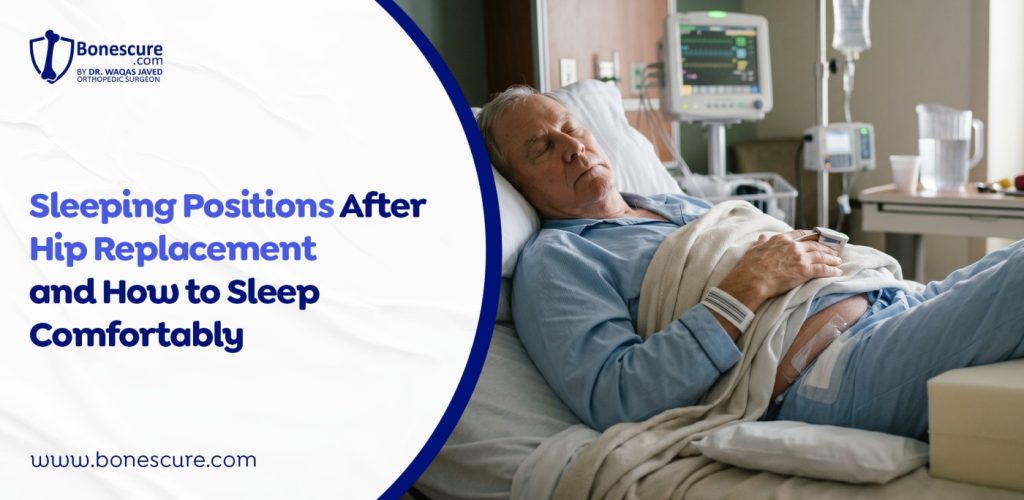
After a hip replacement surgery, patients are often worried about the recovery and how early they can move. However, they don’t really think about the sleep disturbance they might have. Sleeping positions after hip replacement surgery are an important factor during the recovery phase. Wrong positions during sleep can delay and elongate the recovery phase. Bedtime after surgery can become a stressful experience. Tossing and turning becomes frustrating. Every position feels uncomfortable, and a lack of sleep causes irritability.
The good news? With the right sleeping positions and a few simple adjustments, restful sleep is absolutely possible. Patients can reduce pain effectively and make their bedtime comfortable.

In this way, recovery is also faster because the patient is having quality sleep. This article provides detailed information about medically proven safe sleeping positions after hip replacement surgery. Read this guide completely and understand how to sleep properly during the recovery period and make life easier.
The patient must take extreme care after a hip replacement surgery. During this time, the hip joint is healing and stabilizing. The patient might experience mild swelling and soreness around the surgical area. In order to avoid discomfort and pain, the patient must adopt a proper sleeping position. It will provide the following benefits for the patient:
It is the safest and most comfortable option. It is recommended by orthopedic specialists, especially during the early weeks (first 6 to 8 weeks) after hip replacement surgery. This position keeps the spine and hips of the patient aligned. It allows the weight of the body to be distributed evenly. Consequently, unnecessary pressure on the operated region is greatly minimized.
In addition, lying flat on the back eliminates the possibility of twisting or bending. The ideal way to sleep in this case is to put a pillow between the legs when lying down. A good idea may also be using a pillow under the knees. By doing so, the pressure on the lumbar region is considerably reduced.
Second, the individual may use a small pillow beside their leg, which will make it impossible for the operated leg to rotate outward. Both legs should be apart from each other without crossing. Crossed legs may dislocate the hip joint out of the safe region.
After a few weeks of the hip replacement surgery, patients can sleep on the non-operated side. It can be opted for after approval is obtained from the orthopedic doctor. In this sleeping position, stress will be minimized in the surgical area. It is a natural position that can be adopted by the patient without feeling uncomfortable. Using pillows and keeping them between the knee and ankle joints will help in maintaining their proper alignment. Using this pillow helps to ensure the leg on which surgery was done is spread apart and stops it from sliding towards the bed.
No matter what happens, never allow the hip joint to get dislocated under any circumstances. Apart from this, if the patient feels the need for back support, more pillows can be placed.
Not all positions are safe after hip replacement surgery. Some can increase discomfort or even risk injury. Below are some of the sleeping positions that must be avoided to prevent hip dislocation after hip replacement surgery:
Sleeping on the Operated Side (Early Recovery): This puts direct pressure on the healing joint and can cause pain or swelling. This position forces the pelvis to twist and the lower back to arch. It also makes it impossible to keep the leg in the safe, neutral zone.
Crossing Legs While Sleeping: Crossing legs can misalign the hip joint and increase the risk of dislocation. It is the most common cause of post-op instability.
Sleeping on the Stomach: This position forces the hip into unnatural angles and can strain muscles and ligaments. It often causes the hips to rotate or the back to arch excessively, putting unpredictable pressure on the new joint.
The Fetal Position: Tucking the knees up too high (flexing the hip beyond 90 degrees) can be dangerous during the early healing phase.
The patients must adopt these sleep habits for good quality sleep. Once the joint is healed and recovered properly, then the patient can sleep in any position. But before that, they should never rush into unsafe positions. Moreover, the patient should not skip placing the pillow between their legs. The hip joint or waist must not be twisted, never crossed, and sharp sleeping angles must be avoided.
| Sleeping Position | Safe After Surgery | Comfort Level | Notes |
|---|---|---|---|
| On the back | Yes | High | Best for early recovery. Place a pillow under your knees to reduce lower back strain. |
| On the non-operated side | Yes (later) | Medium-High | Use a pillow between the knees and ankles. Proceed with caution. |
| On the operated side | No (early) | Low | Avoid until approved. |
| On stomach | No | Very Low | Twists the pelvis; unsafe for the new joint. Can strain the hip joint. |
| Legs crossed | No | Risky | Increases dislocation risk. |
| Fetal Position | No | Risky | Hip joint dislocation and pain. |
If the patient is adopting the recommended sleeping position, then these tips can make the sleep more comfortable and pain-free. These small adjustments can make a big difference, speed up the recovery process, and prevent dislocation of the hip joint.
Sleeping after hip replacement surgery can feel like a challenge at first. But it doesn’t have to stay that way. With the right sleeping positions and proper support, patients can sleep comfortably. Quality sleep enhances the recovery process and allows the patient to start a normal routine as early as possible. During the initial weeks of recovery, patients must avoid risky sleeping positions. By prioritizing the back-sleeping position and using pillows to maintain alignment, sleeping comfortably becomes a manageable routine. Every night of better sleep is a step closer to full recovery.
Bones Cure stands at the forefront of orthopedic excellence, providing advanced care and life-changing solutions for patients suffering from severe joint pain and mobility issues through Hip Replacement Surgery in Lahore. The focus is on restoring movement, reducing discomfort, and helping patients return to a more active and pain-free life with modern surgical techniques. Recognizing that delay can often lead to further physical decline, the orthopedic specialist emphasizes the importance of early intervention before symptoms become unmanageable.
Under the expert leadership of Dr. Waqas Javed, an expert orthopedic surgeon at Bones Cure, patients are guided through a sophisticated and highly effective treatment process designed to restore function and eliminate discomfort. Dr. Waqas Javed is renowned for his precision and patient-centred approach, ensuring that every individual receives a customized recovery plan that honors their unique needs.
By choosing Bones Cure, patients gain access to a dedicated team committed to the belief that everyone deserves a healthy, active lifestyle. Prospective patients are encouraged to consult immediately to reclaim their independence and rediscover a life free from the constraints of hip pain.