
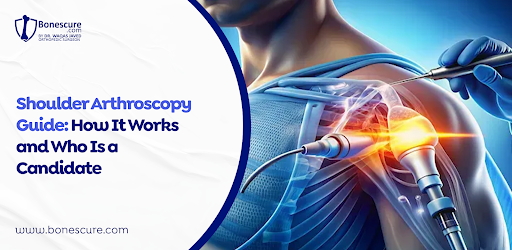
Constant shoulder pain can cause discomfort and limit arm movement. Simple daily life activities become hard to manage. The comfort of the person is replaced by chronic shoulder pain, and the quality of life is disturbed. Patients try to minimise the pain by using ice packs or resting. But sometimes the pain does not go away and disturbs the sleep of the person. Patients may also give a try to physical therapy or medications (including painkillers and injections). But if the damage to the shoulder is severe, then these non-invasive therapies are not successful. That’s when the doctor recommends a shoulder arthroscopy to a patient.
Hearing about surgery often makes the patient nervous, and they hope that the pain will go away on its own. They think about avoiding it. It becomes hard for them to make a decision. However, surgery is an option that can replace shoulder pain with comfort. This article provides detailed information about shoulder arthroscopic surgery. It mentions the procedure of the surgery and also discusses the ideal candidate for a shoulder arthroscopic surgery.
Shoulder Arthroscopic Surgery is a minimally invasive surgical procedure. It is simply used to diagnose and treat various shoulder joint problems. Surgeons make a small incision in the shoulder area and insert a tiny camera through it. This tiny camera is nearly the size of a pencil and is called an arthroscope. This camera is used by the surgeon to visualise the inside of the shoulder joint clearly. During the procedure, the surgeon efficiently repairs or removes the damaged part of the shoulder joint. Arthroscopic surgery does not involve a large cut. This gives an advantage of faster and quick recovery. A small incision does not mean that the surgery is not successful. Research shows that shoulder arthroscopic surgery has a high success rate. It has been used worldwide to treat chronic shoulder joint problems. An experienced surgeon performs shoulder arthroscopy with precision.
The procedure of a shoulder arthroscopy consists of well-planned steps. Knowing what will happen during the surgery eases the anxiety of the patients. The complete details of the shoulder arthroscopic surgery are mentioned below.
On the day of surgery, the patient is given anesthesia. The surgeon may give general anaesthesia (patient is asleep) or regional anaesthesia (numbing the shoulder and arm) to the patient. The purpose of anaesthesia is to prevent pain sensation during surgery. After anaesthesia, the patient is positioned carefully. The patient can be sitting upright if regional anaesthesia is provided. In the case of general anaesthesia, the patient is lying on one side. The choice of anaesthesia depends upon the health of the patient and the complexity of the surgical procedure.
After administration of anesthesia, the surgeon starts the shoulder arthroscopy surgery. Small openings are created in the skin around the shoulder joint area. These openings are called portals. Sterile saline solution is injected into the joint by the Orthopaedic surgeon. This solution inflates the shoulder joint and provides a crystal-clear view of tendons and ligaments. Through these portals arthroscopes and surgical tools are inserted into the shoulder joint by the surgeon. Specialised surgical tools are used during shoulder arthroscopy surgery.
The arthroscope is inserted through one of the portals by an orthopedic surgeon. Through this small camera, the specialist can see inside the shoulder joint in a high-definition image. The arthroscope is connected with a monitor that displays real-time images of the patient’s shoulder. Through this arthroscope, the surgeon can:
Using precise techniques and advanced surgical tools, the surgeon repairs the damage to the patient’s shoulder joint. The shoulder joint can be shaved and stabilized. Ligaments can be anchored in their place. Also, the inflamed tissue can be removed easily. Tendon repair is also possible through this surgical procedure. The total time of the surgery could be from 30 minutes to 2 hours. Complex surgeries take longer time.
After the surgery is completed, the arthroscope and the surgical instruments are removed from the shoulder. The small incisions made are closed with stitches or adhesive strips. After that, they are covered with a small bandage to prevent infections. The arm is supported through a sling. Most procedures of shoulder arthroscopy surgery are outpatient, meaning the patient can go home the same day.
The following problems of the shoulder joint can be treated successfully with arthroscopic surgery of the shoulder.
| Condition | Details | How Shoulder Arthroscopy helps |
|---|---|---|
| Rotator Cuff Tears | Tears in the tendons of the shoulder joints. These tendons keep the shoulder stable. Tearing affects stability. One of the most common reasons for surgery. | The surgeon uses small anchors or sutures to reattach the torn shoulder tendon. The tendon attaches to the joint. |
| Labral Tears (SLAP/Bankart) | The ring of cartilage (labrum) is torn. Caused by overuse of the shoulder. May also be due to a shoulder dislocation. | Surgeon smoothes out the torn labrum. A repaired tear provides stability to the shoulder joint. |
| Shoulder Instability or Dislocation | The shoulder joint repeatedly slides out of place. Or it can dislocate, causing the stretching of ligaments. | During the procedure, stretched ligaments are tightened or reattached to the bone. The joint becomes stable. |
| Shoulder Impingement | A condition where tendons get pinched by bones in the shoulder. This causes pain with overhead movement. | The surgeon decompresses the tendon by shaping the bones in the shoulder. Inflamed tissue is treated. |
| Frozen Shoulder | The joint capsule becomes so thick and tight that movement is nearly impossible. | The tight capsule of the shoulder joint is removed through arthroscopy. The shoulder becomes movable again. |
| Bone Spurs | Overgrowth of bone on the edges. Spurs develop where the bones and joints of the shoulder meet. Cause friction and pain. | The surgeon uses a burr to smooth down or remove the excess bone growth. |
| Inflammation of the Joint Lining | Synovial tissue of the shoulder joint thickens. Inflammation, pain, and swelling are felt by the patient. | Inflamed tissue is removed by the surgeon. The process is called synovectomy. Pain is relieved. |
| Damaged Cartilage | Wear and tear of the smooth cartilage covering the ends of bones. This leads to rough surfaces, causing discomfort. | Rough cartilage is smoothed out. Loose flaps are removed. Gliding improves. |
| Loose Bodies | Bits of bone or cartilage floating inside the joint. May cause locking or catching sensations. | The "loose bodies" are removed, and the joint is cleaned out. |
Not everyone with shoulder pain needs surgery. At first, conservative treatments are tried, such as medications, physiotherapy, and rest. However, if these treatments fail to solve the problem, then doctors recommend shoulder arthroscopic surgery. The ideal candidate for a shoulder arthroscopic surgery includes patients who
During the consultation with an Orthopedic surgeon Diagnostic imaging is recommended, such as X-rays or MRI. The results of these tests confirm a structural problem that may need physical repair. The best candidates for shoulder arthroscopy surgery are healthy individuals. They have realistic expectations for the surgery. The final decision is made by the surgeon based on the severity of joint damage
Shoulder injuries can deeply affect the daily life of the patient. Movement becomes Limited and the patient is in constant discomfort throughout the day and night. When other treatments fail to provide relief to the shoulder, then surgery becomes necessary. Shoulder arthroscopy surgery is a modern technique that is effective and less invasive for the patient. It provides faster recovery and improved joint function. Understanding the complete surgical process helps the patient to feel confident about the surgery.
Bones Cure provides successful shoulder arthroscopy surgery for patients who are suffering from shoulder joint problems. Visit the clinic and get expert advice from Dr. Waqas Javed Take a step towards an active and pain-free life.