
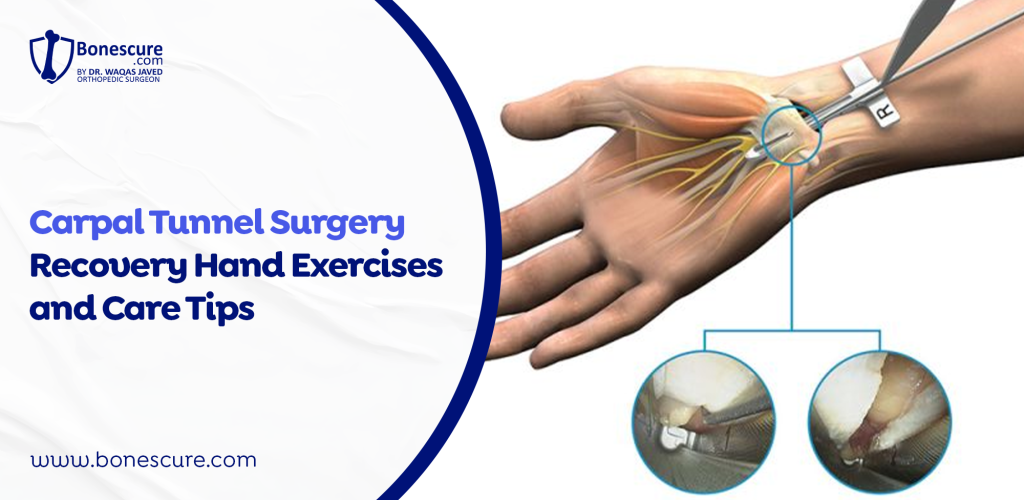
After carpal tunnel surgery, the primary goal is simple: regaining the strength and freedom to use your hands again. While full recovery takes time, the right combination of dedicated care and targeted exercises can significantly speed up your healing.
Whether it’s picking up a morning coffee mug, typing an email, or simply fastening a shirt, the daily tasks that felt like a struggle before surgery will soon become effortless again. But after the surgery for getting quick and better results you need to follow the proper guide and tips during the Carpal tunnel syndrome surgery recovery process. The skilled and experienced orthopedic surgeons like Dr. Waqas Javed always guide their patients and provide the essential hand exercises and recovery tips to get back to their normal routine with confidence.
This article explains common hand exercises and the best care tips after a carpal tunnel surgery. Understanding the exercises properly can speed up the healing and recovery process, enabling the patient to use their hand like a normal person.
Right after the surgery, the patient feels immediate pressure relief for the median nerve. That constant pain is now gone forever. However, the surrounding tissues and the incision site need time to heal. Within a few weeks, the patient is able to resume light activities. However, complete recovery takes up to 3 months.
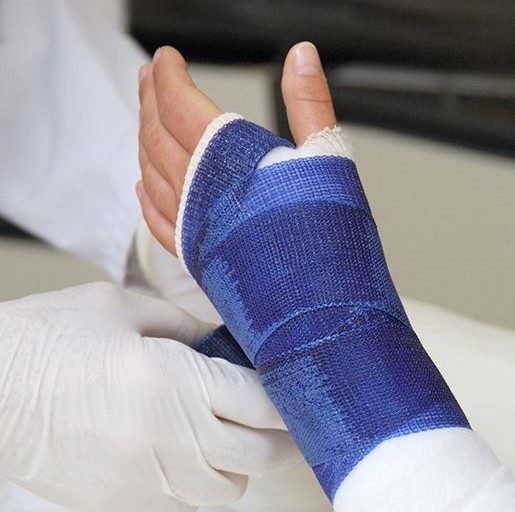
For the first 24-48 hours, it is important to take care of swelling of the hand. It is advised by the surgeon that the patient keep the hand raised. Patients are usually put into a bulky dressing or a splint for wrist stabilization. At this point, the patient is advised to move their fingers around to promote circulation. This also prevents stiffness of the joint.
After a few days, the patient can move their hand more often. By week two, sutures are typically removed. From the outside, the skin looks closed and healed. However, the internal tissues are delicate, and they need more time to heal properly. In this period, the patient cares for their hands and does not engage in lifting heavy objects. The patient performs various hand exercises that aid in the fast recovery of the internal tissues.
Over a period of between 3 and 6 weeks, the hand strength starts to increase steadily. With proper exercise, good hand care, and avoidance of exerting pressure on the hand, the hand is fully recovered internally after 3-6 months.
Movement after surgery is medicine. Patients who regularly perform hand exercises are able to heal faster as compared to those who skip hand exercises. The exercises mentioned below are gentle and safe after a carpal tunnel syndrome surgery. The goal of these exercises is to keep the tendons and ligaments healthy.
These exercises are recommended by the therapist after the surgery. The purpose of these exercises is to allow the tendon to glide smoothly and not get stuck in scar tissue. The patient first straightens their hand and fingers. After that, they bend the tips of their fingers down and touch the top of their palm.
Another exercise is to bend the fingers at the middle knuckles and touch the fingertips to the base of the palm. These slow movements of fingers allow the tendon to glide smoothly. Lastly, the hand is closed into a regular fist while talking, with the thumb outside the fingers. These exercises are repeated regularly, and they prevent stiffness of the internal muscles of the hand.
This is one of the most important exercises that a patient must do. The purpose of this exercise is to gently stretch the median nerve. After the decompression of the nerve from carpal tunnel surgery, the patient needs to train the nerve for normal hand movements.
For this purpose, the patient holds their hand in a fist while the thumb is tucked in. Then the patient straightens the finger and thumb. The next step is to gently tilt the hand back towards the forearm. Holding the hand for 5 seconds in each position is necessary for the muscles to train. This exercise is usually repeated five times.
Another exercise that you need to follow during carpal tunnel surgery recovery is finger bends. During this simple exercise, the patient starts by opening their hand. Then, they slowly bend their fingers into a fist and hold for 5 seconds. This exercise is repeated several times, and it helps to restore flexibility in the fingers.
These exercises involve the use of the thumb in order to regain its coordination. The patient should gently touch the tip of their thumb to the tip of each finger one by one. Hold for a few seconds and repeat across all fingers. This improves fine motor skills needed for tasks like picking up coins or holding a pen.
Patients are also encouraged to use a soft stress ball and gently squeeze and release it. This is the best exercise to strengthen the grip of the hand. This should be started after a few weeks of surgery, so that excessive pressure is avoided.
Controlled exercises can give the following benefits to the patient after surgery:
Apart from exercise, there are some tips for easy and faster carpal tunnel surgery recovery. Important tips are mentioned below:
Keep the bandage around the hand clean and dry. After it is removed, regularly wash the area and pat it dry. Prevent the incision area from infections by keeping it sterile. Avoid excess use of water till the incision is fully sealed. Do not put pressure on the wrist.
Patients are advised to use an ice pack frequently in the first few days after surgery. Icing the hand prevents swelling and pain. Moreover, the hand should remain raised above the heart level to reduce swelling and discomfort.
The massage of the scar is important after the incision is fully closed. A simple moisturizer frequently applied to the incision scar can help to minimise it. The feeling of tightness and sensitivity around the scar can be reduced through proper massage.
Pain will occur around the incision area after surgery. However, it can be managed through medications, rest, and cold compresses. The patient should never ignore discomforting symptoms and consult the surgeon if the pain is severe.
| Phase | Timeline | Primary Goal | Recommended Activities |
|---|---|---|---|
| Phase 1 | Days 1–3 | Reduce Swelling | Elevation, finger wiggles, icing. |
| Phase 2 | Days 4–14 | Early Mobility | Light grooming, eating, and gentle tendon glides. |
| Phase 3 | Weeks 2–8 | Functional Use | Typing, driving (short distances), and folding laundry. |
| Phase 4 | Weeks 8+ | Strengthening | Light weights, gardening, full weight-bearing. |
| Phase 5 | Months 3 to 6 | Full Recovery | Resume most activities fully |
Recovering from carpal tunnel surgery is a journey of rediscovery. The patient might find it hard to manage the exercise. But it is very important for smooth recovery and faster results. Keeping the hand still for days can make the situation worse. There is pain and swelling, but it can be managed with medication and icing. Exercises that are proper in nature will ensure that the person regains control very quickly and easily. That is why it is necessary to maintain consistency during Carpal Tunnel Surgery Recovery.
At Bones Cure, our orthopedic specialist, Dr Waqas Javed specializes in both surgical and non-surgical solutions for carpal tunnel syndrome. He is dedicated to helping you and your family regain full hand function. Reach out to consult with Dr. Waqas Javed now; his expertise in modern orthopedic techniques makes him the ideal choice for those seeking lasting relief and expert guidance.